How I work, and why
This page is about the convictions behind my work: why I do research the way I do, why I give time to committees and communities, and what I hope younger researchers take from it. The SoMeX website describes how our lab works; this is my personal view.
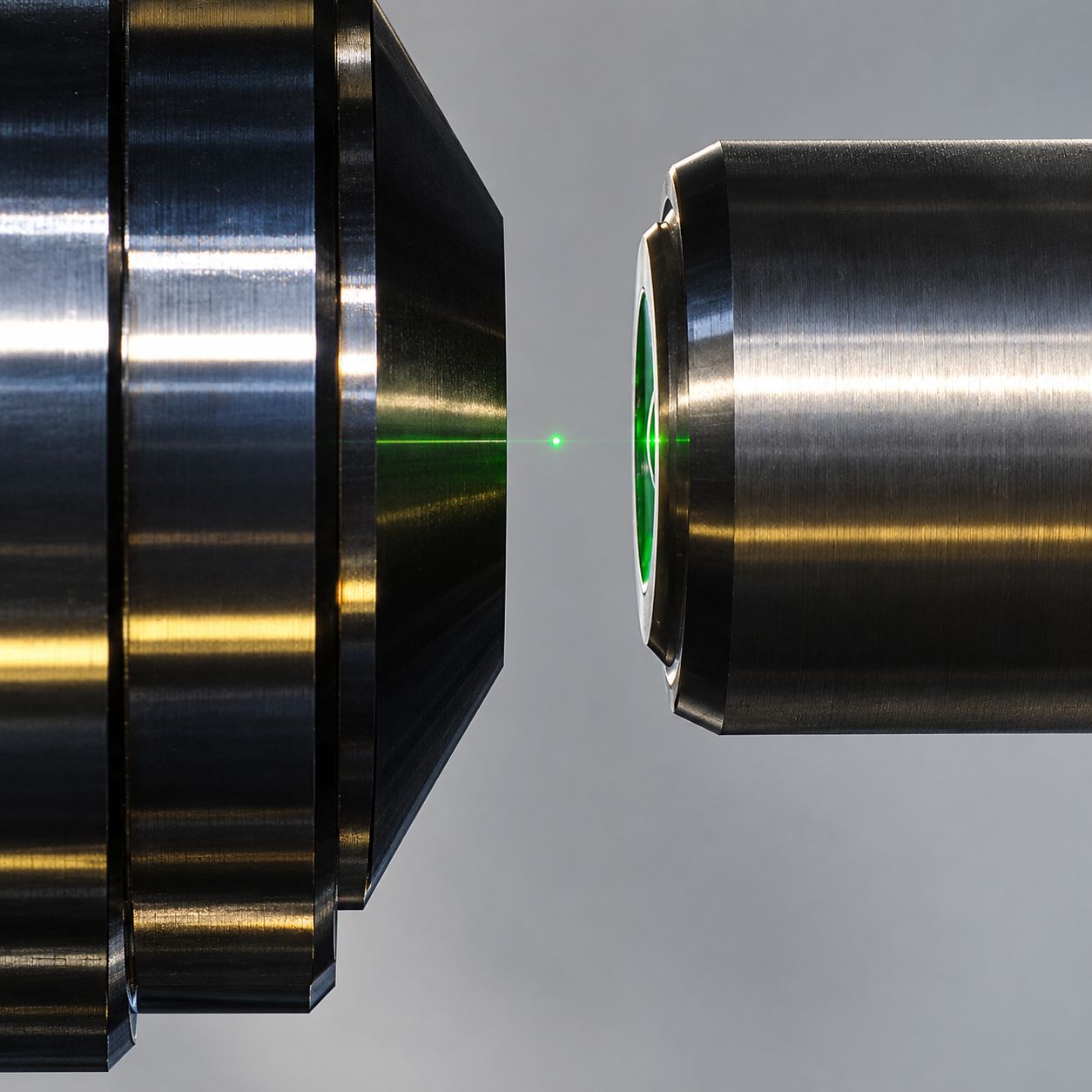
Have fun and enjoy the ride
If I had to give one piece of advice to a young researcher, it would be this. Research is demanding, uncertain and often frustrating, but it is also one of the few jobs where curiosity is the job description. The rest of this page is, in a way, about how to keep it that way.
Ambition and realism in research funding
I do not think we have found a good balance between ambition and realism in the way research is funded. Funding tends to go to researchers who are already successful. In Italian we say "piove sempre sul bagnato": it always rains where the ground is already wet. With the budget cuts many countries are facing, I expect this to get worse, not better.
This is where collaborative, and often interdisciplinary, work comes in. When groups with different skills join forces, they can take on questions that none of them could tackle alone, and they give ideas and people who would not be funded on their own a real chance.
Why I serve on committees
Committees are not glamorous, but they are where important parts of our work are decided. I accept these roles to help them work well, to bring in new ideas, and to make sure we do not get stuck in the past but help shape what comes next.
Why I keep going back to space
In 2001, just after my master's thesis, I stepped in to help my supervisor pull off our first space experiment, GRADFLEX, which flew on the FOTON-M3 satellite in 2007. It was a huge learning experience and an enormous amount of work. Like David Foster Wallace after his cruise ("A Supposedly Fun Thing I'll Never Do Again"), I promised myself I would never do it again.
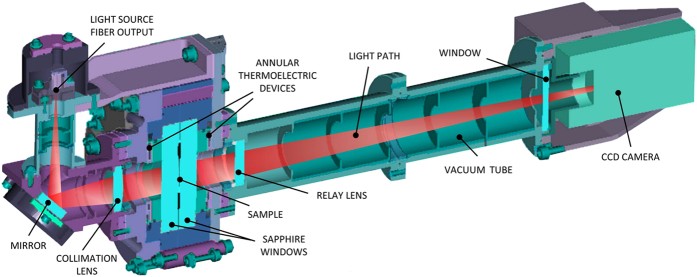
But you know how it goes: space sucks you in. Today I coordinate the science team of Sedimenting Colloids, an experiment planned for the International Space Station, and I serve on the committees that advise the European Space Agency on its science. Removing gravity lets us see physics that is hidden on Earth, and that is hard to resist.
Building communities
In 2014 Stefano Buzzaccaro, Emanuela Zaccarelli and I founded the Italian Soft Days. We were three colleagues and friends who wanted to show the world that the soft matter community was young and lively. The first meeting took place in Rome, and seven editions later we got older, but the young and lively community is still there.
After moving to Vienna, in 2022 I started the Vienna Soft Matter Day with Emanuela Bianchi, Peter van Oostrum and Anđela Šarić, to bring together the soft matter community of the Vienna area. It is free of registration fees and open to everyone, from master's students to professors, and it now rotates among the city's universities and institutes.
Methods that others can use
I am proudest of the methods that other people pick up and use. Differential Dynamic Microscopy is now run on microscopes around the world, and our group shares its tools openly: the fastddm software library and the ShearView rheometer are both open source, and we write tutorials so that newcomers can start quickly. Most of my papers have a preprint or a free full text, linked from the publication list.
Editing and reviewing
Peer review only works if people who publish also review, and review carefully. I try to give back more than I take: over my career I have reviewed more than three times as many papers as I have published.
Since 2020 I have also handled manuscripts as an editor: as a Section Editor of Papers in Physics, as an Associate Editor of Frontiers in Physics (2021-2023), and since 2023 as an Associate Editor of Soft Matter. Editing takes time, but I do not see it as a reason to stop reviewing, and I do my best to keep saying yes when I am asked.
As an editor I also see the other side. Many colleagues regularly turn down invitations to review, while sending us a lot of papers. Peer review was meant as a way of giving back to the community, and this goes against what I believe: if we want others to read our work carefully, we should be ready to do the same for them.
- 317verified peer reviews since 2004
- 3.4reviews for every paper published, 2004-2026
Reviews: Web of Science researcher profile (formerly Publons), as of Oct 2026; reviews not registered there are missing. Papers: this site's publication list. 2026 is the year to date. The vertical lines mark when I started as an editor for Papers in Physics (2020), Frontiers in Physics (2021) and Soft Matter (2023).
Recognition: Top reviewer in Physics, Publons (2018); Top reviewer in Physics and Astronomy, Publons (2016).